
What Is The Minimum Salary Required for Credit Card


Bio
Sandipan Mitra is the CEO and co-founder of Pice. He boasts eight years of experience in the B2B and fintech sector. Sandipan's journey includes significant roles at multiple Indian Unicorns Including Product at PayU, and as founding member / VP, Product at Open Financial Technologies.
- 29 Jan 26
- 10 mins

Share


What Is The Minimum Salary Required for Credit Card
 Sandipan Mitra
- 08 Mins
- 29-01-26


Table of Contents
- What is the Minimum Salary Required for Credit Card
- Is Minimum Salary an Important Criterion for Credit Card Approval?
- Minimum Salary Requirement for Different Types of Credit Cards
- Minimum Salary Requirement Across Various Indian Banks
- Factors Influencing the Approval of a Credit Card (Other Than Salary)
- Eligibility Criteria for an Entry-Level Credit Card Approval
- Documents Required To Apply for an Entry-Level Credit Card
- 10 Tips to Improve Credit Card Eligibility
- 3 Common Mistakes to Avoid While Applying for a Credit Card
- Conclusion
Share
Key Takeaways
- For most entry-level cards in India, the minimum salary required typically ranges between ₹15,000 and ₹25,000 per month.
- Salary is important, but not everything. Banks evaluate credit score, job stability, existing debts, and repayment history.
- Fixed deposit–backed credit cards allow approval even with no minimum salary requirement.
- Platinum and premium cards usually require a monthly income of ₹45,000 or more, along with a strong credit profile.
- Applying for a card aligned with your income level is smarter than aiming too high initially.
Thinking of owning a credit card but unsure if your income qualifies? Many wonder, “What is the minimum salary required for credit card?” While credit cards were once seen as a luxury, today they are almost a necessity, with banks offering options even for entry-level earners.
Your monthly salary plays a key role in approval, but there are alternatives too, like credit cards against fixed deposits. For instance, Kotak Mahindra’s DreamDifferent credit card requires no minimum income, only a deposit of ₹10,000.
So, keep reading to discover the minimum salary needed for credit cards across various Indian banks.
What is the Minimum Salary Required for Credit Card
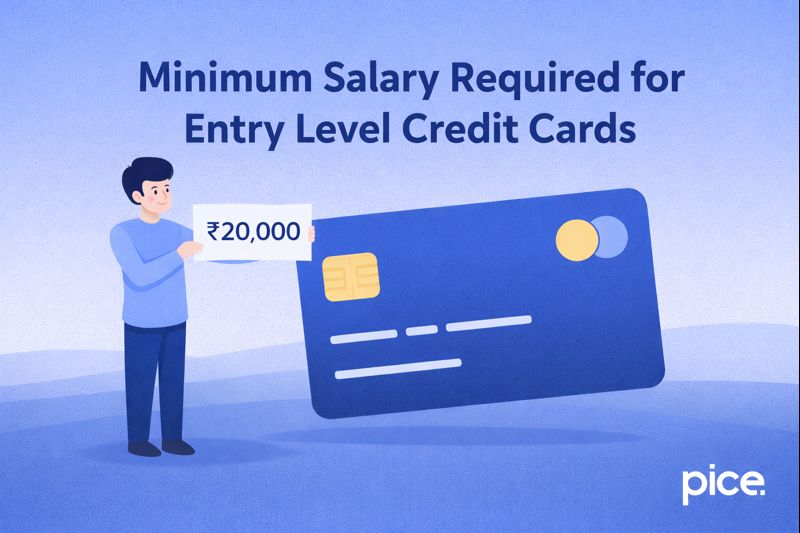
When applying for an entry-level credit card in India, your income is a key factor, but not the only one. Here is a detailed breakdown:
- On average, the gross salary required for an entry-level credit card ranges from ₹25,000 to ₹40,000. However, not everyone needs to meet this threshold. Scenario: Ramesh earns ₹18,000 per month. Instead of applying for a premium card, he opts for Kotak Mahindra’s DreamDifferent card with a fixed deposit of ₹10,000, and approval is quick and hassle-free.
- Most banks set a minimum salary threshold between ₹15,000 and ₹25,000, depending on their policies.
- Each bank evaluates applicants differently, and salary requirements can vary according to internal guidelines.
- Issuers also consider credit scores, income stability, existing debts, and repayment history before approving a card.
- While many banks do not specify a minimum income, they require applicants to have a stable, well-paying income source to qualify.
Understanding these points helps in choosing the right credit card and improves approval chances.
Is Minimum Salary an Important Criterion for Credit Card Approval?
The minimum income level for a credit card approval is one of the first factors banks consider in the approval process. Since credit cards are essentially lines of unsecured credit, banks thoroughly check the repayment capacity of their credit card applicants to avoid losses.
The amount of your salary and the stability of your income act as a verification for banks to evaluate your credibility.
Mostly, banks segregate credit card applicants into self-employed personnel and salaried employees. The basic threshold for salaried employees generally starts from ₹15000. Whereas self-employed personnel have to show comparatively higher profits through their Income Tax Returns (ITR) filings and bank statements, they are subject to additional scrutiny.
Must reads
Minimum Salary Requirement for Different Types of Credit Cards
Banks design different credit cards with unique features to cater to separate groups of target audiences. Let’s find out the difference in minimum salary required for entry-level cards and gold or platinum cards.
- Entry-Level Credit Cards (Basic Credit Cards)
The entry-level credit cards are meant to fulfil the credit card requirements of people with low to moderate income levels.
Now, what is the minimum salary required for a credit card of this type? Well, it ranges between ₹15,000 to ₹30,000. Apart from that, this card comes with low joining and annual renewal fees.
Tip: If your monthly salary is ₹20,000, consider entry-level credit cards like ICICI or PNB for better approval chances.
- Premium Credit Cards
The platinum credit cards offer a wider array of premium benefits, which include elevated rewards, higher credit limits, and extended warranty or price protection.
Platinum credit cards are designed for people who want something better than an entry-level credit card, and hence these cards demand a minimum salary requirement starting from ₹45,000 to ₹50,000 and above.
Besides the minimum salary, a person obtaining these credit cards will need a credit score of 750 or above.
Minimum Salary Requirement Across Various Indian Banks
What is the minimum salary required for credit card in different banks? Well, go through the table below to find out.
| Bank Name | Minimum Salary Required for Credit Card |
| ICICI Bank | ₹20,000 per month (Starting from ₹2.4 LPA) |
| PNB Bank | ₹20,000 per month (Starting from ₹2.4 LPA) |
| CitiBank | ₹20,000 per month (Starting from ₹2.4 LPA) |
| Kotak Mahindra Bank | ₹25,000 per month (Starting from ₹3 LPA) |
| SBI Bank | ₹25,000 per month (Starting from ₹3 LPA) |
| HDFC Bank | ₹25,000 per month (Starting from ₹3 LPA) |
| Axis Bank | ₹25,000 per month (Starting from ₹3 LPA) |
| HSBC Bank | ₹30,000 per month (Starting from ₹3.6 LPA) |
Factors Influencing the Approval of a Credit Card (Other Than Salary)
Here are some other factors that credit card issuers consider, other than monthly income, to evaluate an applicant’s eligibility for a credit card.
- Employment Stability
Having a stable source of income reduces the risk of non-compliance for banks. Hence, having a stable job at a private company or a government job increases the probability of being approved for a credit card.
- Existing Debts
Even if you have a decent income, you may have open credit lines such as debts, EMI payments, and other credit cards. Hence, banks verify your debt-to-income ratio. If they find you in a stable position to safely open another credit line, your request may be approved.
- Credit Score
A decent score of 750 or above indicates that you have a strong credit history and that you can be trusted with credit. A score of 600 and above is average. However, having a credit score below 600 decreases your chances of credit card approval.
- Income Source
Having multiple sources of income can improve your chances of approval. For example, having a business as the main source of income and rental profit or receiving interest on FDs can increase your chances of approval.
- Banking Relationship
If you have an existing credit relationship with your bank and you have been duly repaying your debts or bills. You must try to get a credit card from your bank. Having a good credit relationship with the bank in the past can improve the chances of your credit card approval.
- Residency and Age
Most banks or financial institutions that issue credit cards have a common eligibility criterion: the applicant must be an Indian citizen, and the minimum age ranges from 18 to 21 years.
Must reads
Eligibility Criteria for an Entry-Level Credit Card Approval
The eligibility criteria for credit cards vary based on different banks and their company policies. Here are some common eligibility criteria for credit cards in banks.
- Age: must be between 18 to 65 years of age.
- Source of Income: salaried and self-employed people.
- Credit Score: There is no specified minimum credit score. However, a score of 750 or above is ideal.
- Residency: The applicant must be a resident of India.
Documents Required To Apply for an Entry-Level Credit Card
Here are the documents that you must have readily available to apply for a credit card in India.
- Identity Proof: KYC documents such as Aadhaar card, PAN Card, or Driving License.
- Income Proof: Recent salary slips or Income Tax return Filings, based on the type of income.
- Photographs: Recent passport-size photographs of the applicant.
- Residential Status: Proof of residency includes Aadhaar Card, utility bills, rental agreement, etc.
10 Tips to Improve Credit Card Eligibility
Follow the tips below to improve your chances of getting your credit card request approved.
- Boost Your Credit Score
The best way to boost your credit scores is by taking up a loan and repaying the EMIs and interests without fail. This will eventually help increase your credit score.
- Show Multiple Sources of Income
Show all your primary and secondary sources of income, such as salary slips, profit from interests and investments, etc. This will help to improve the chances of your loan approval.
- Opt for a Credit Card on Fixed Deposit
If someone is having difficulty getting approved for a credit card due to a low income level. They can opt for a credit card under a fixed deposit.
- Clear Existing Debts
Sometimes, credit cards do not get approved because the individual already has considerable debt. Paying back existing debt will improve your debt-to-income ratio and make you eligible for credit cards.
- Apply for the Right Credit Card
Banks design unique credit cards for different types of individuals. Apply for a credit card that aligns with your income level and repayment capacity.
- Avoid Applying for Multiple Cards in a Short Span
Applying for multiple cards in a short span of time can reduce your credit scores. Focus on applying for one credit card with a decent credit limit.
- Have A Steady Income Source
Steadily working at a job represents stability. This can help to improve your chances of being eligible for a credit card.
- Increase Your Fixed Deposit and Savings
The main objective of banks is to verify your repayment capacity. Having considerable investment funds or settled stores of funds with the bank can improve your eligibility for a credit card.
- Provide a Guarantor
If someone’s salary does not meet the minimum requirement in the banks, they can include a co-applicant or underwriter who can vouch for them. This reduces the bank’s risk and increases your eligibility.
- Periodically Check Your Credit Scores
Sometimes, even paid loans do not get closed. Having open and stagnant loans in your name can indicate a poor credit history, which may lower your credit scores. Check your credit reports periodically to avoid such instances.
💡Pay your credit card bills in an easy and secure way with the PICE App.
Must reads
3 Common Mistakes to Avoid While Applying for a Credit Card
Maintain a strategic distance from the following pitfalls when applying for a credit card.
- Do not give unupdated or incorrect data when applying for a credit card. Even if you are eligible financially, your approval can be dismissed.
- Avoid applying for a credit card if, for any reason, your credit score is too low. This can even further harm your credit scores.
- Do not provide incomplete documents. This can make the issuer suspect you and reject your request for a credit card.
Conclusion
Even though credit cards are common, banks still face the risk of financial loss if a customer is unable to repay. Hence, having a stable source of income with decent pay is necessary to prevent financial loss. Well, now that you know what is the minimum salary required for credit card, it is also crucial to know that other factors, like your debt-to-income ratio, play a major role in the approval of your credit card.
FAQs
What is the minimum salary required for credit card in India?
The minimum salary usually starts from ₹15,000 per month for basic credit cards.
What is the minimum salary required for credit card without income proof?
In such cases, FD-backed credit cards are available with no salary requirement.
Does a higher salary guarantee credit card approval?
No, even high earners can be rejected if they have poor credit history or high existing debts.
Does having an existing bank account help in getting a credit card?
Yes, a strong banking relationship with regular transactions can positively influence approval.
Can multiple credit card applications affect my eligibility?
Yes, frequent applications can reduce your credit score and lower approval chances.
Read More About Credit Card






About the author

Key Takeaways Earn 1% cashback on all eligible transactions. The...
 0
0
0
Related Articles




×


Want an answer to all your B2B Payment Problems?
Pay your Vendors and Collect from customers with ease using Pice's Payment Solutions. Get:
-
 Instant Transfer
-
 Lowest Rates
-
 Credit on all transaction